We use cookies to make your experience better. To comply with the new e-Privacy directive, we need to ask for your consent to set the cookies. Learn more.

How Do Multisensor Fire Detectors Reduce False Alarms?
How Do Multisensor Fire Detectors Reduce False Alarms?
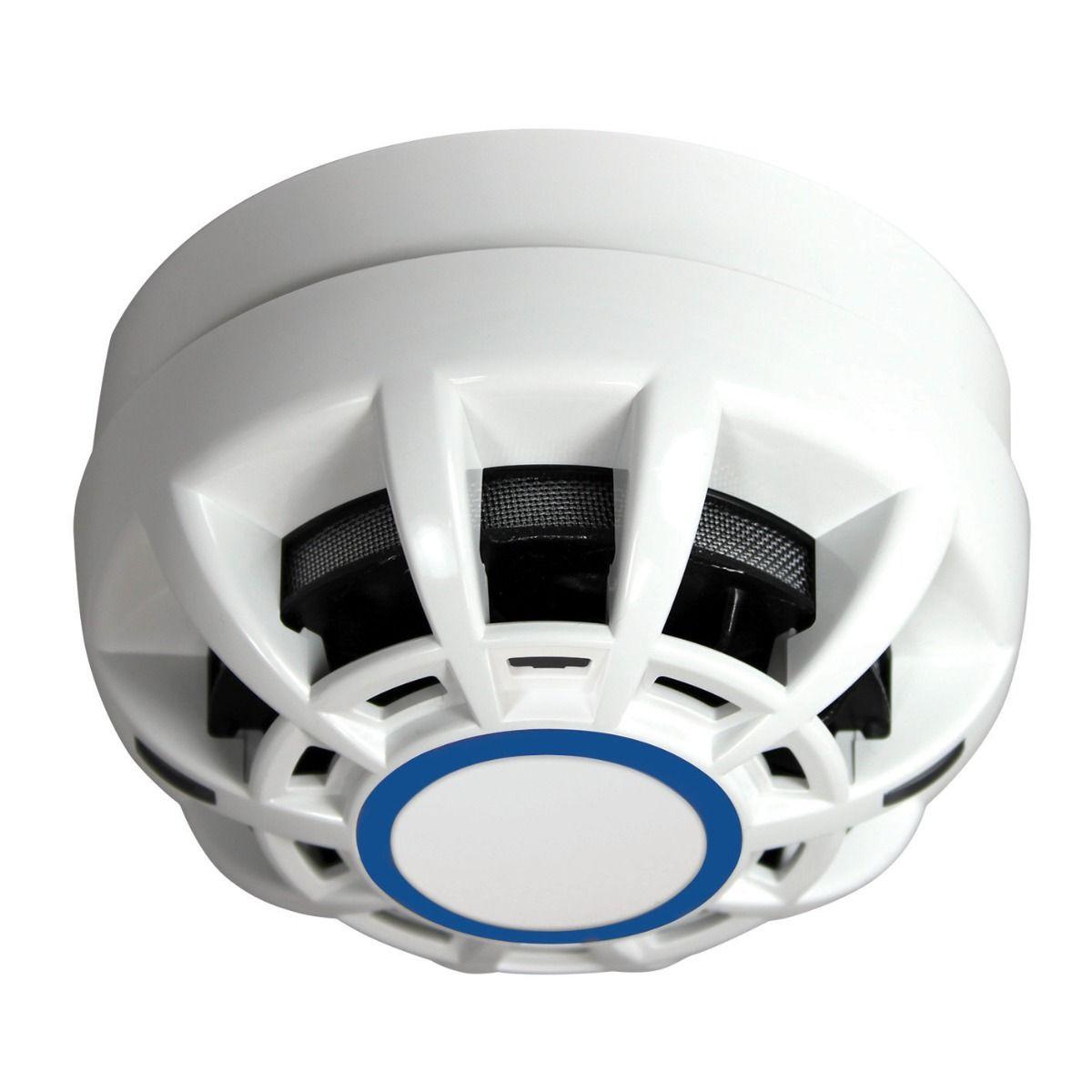
Multisensor Fire Detectors
False alarms are one of the biggest ongoing challenges for fire detection systems. While fire alarms are designed to provide an early warning of fire, environmental factors such as steam, cooking fumes, aerosols and dust can all lead to unwanted activations when the wrong detector type is installed or maintained.
Repeated false alarms can disrupt businesses, interrupt operations and cause occupants to become complacent when an alarm sounds. For building owners, fire safety professionals and system designers, choosing the correct detection technology plays an important role in reducing unwanted alarms.
One increasingly important option is the multisensor fire detector. But what exactly is a multisensor detector, how does it work, and can it genuinely reduce false alarms?
What Is a Multisensor Fire Detector?
A multisensor fire detector combines two or more sensing technologies within a single detector.
- Smoke detection
- Heat detection
- Carbon monoxide (CO) detection
- Other environmental sensing technologies
Instead of relying on a single indication of fire, a multisensor detector assesses information from multiple sensing elements before deciding whether an alarm condition exists.
Key advantage: Multisensor detectors can use information from multiple sensors to better distinguish between genuine fire conditions and common causes of false alarms.
Why Do Conventional Smoke Detectors Sometimes Cause False Alarms?
Smoke detectors are an essential part of modern fire alarm systems, but smoke-like particles can sometimes be present even when there is no fire.
Common causes of unwanted alarms include:
- Steam
- Cooking fumes
- Aerosol sprays
- Dust
- Cigarette smoke
- Hot works
- Building work
- Detector contamination
- Unsuitable environmental conditions
London Fire Brigade identifies cooking, smoking, steam, aerosol sprays and hot works among the common causes of false alarms. This is why simply installing the most sensitive detector available is not always the best solution.
The objective is to achieve the right balance between early fire detection and resistance to unwanted alarms.
How Do Multisensor Detectors Reduce False Alarms?
The primary benefit of a multisensor detector is its ability to analyse more than one fire characteristic simultaneously.
Consider an area where steam or cooking fumes are regularly present. A conventional smoke detector may react to airborne particles that resemble smoke. A multisensor detector can assess that signal alongside another factor, such as heat, before deciding whether an alarm condition truly exists.
Rather than ignoring smoke, advanced detectors analyse the relationship between multiple inputs and determine whether the overall pattern is more consistent with a developing fire or a potential false alarm source.
The Importance of Detector Algorithms
Not all multisensor detectors perform in the same way.
Their effectiveness depends on several factors:
- The sensing technologies used
- Detector sensitivity
- The algorithms processing the signals
- Detector configuration
- The installation environment
- The fire risks present
Research carried out by organisations including the BRE and the FIA tested multisensor detectors against a range of fire and false-alarm scenarios. Tests included steam, cooking fumes, aerosol sprays and dust.
The findings showed that more sophisticated multisensor detectors were generally better at rejecting common false-alarm sources than standard optical smoke detectors.
Important: Multisensor technology is not simply about adding another sensor. The detector algorithm and how it interprets information from those sensors is equally important.
Do Multisensor Detectors Actually Reduce False Alarms?
Evidence suggests they can.
The Fire Industry Association has highlighted research indicating that sophisticated multisensor detectors can be more effective at rejecting false alarms than standard optical smoke detectors.
However, no fire detector can eliminate false alarms entirely. Detectors must still be correctly selected, installed, maintained and tested for the environment in which they operate.
What Does BS 5839-1:2025 Say?
The latest revision of BS 5839-1 places greater emphasis on detector selection and reducing false alarms.
Where point smoke detectors may present a higher risk of false alarms, the revised guidance recommends considering multisensor detectors as part of the design process.
The best detector is not necessarily the most sensitive detector.
It is the detector that best matches the fire risk, environment and operational needs of the building.
It is the detector that best matches the fire risk, environment and operational needs of the building.
Multisensor vs Optical Smoke Detectors
| Consideration | Optical Smoke Detector | Multisensor Detector |
|---|---|---|
| Smoke Detection | Yes | Yes |
| Heat Detection | No | Often |
| Multiple Sensing Technologies | No | Yes |
| Environmental Discrimination | More Limited | Potentially Greater |
| False Alarm Resistance | Application Dependent | Often Improved |
| Suitable For Every Environment? | No | No |
Where Are Multisensor Fire Detectors Useful?
Offices
Office environments often contain kitchens, tea points, printers and other potential sources of airborne particles.
Hotels & Accommodation
Hotels contain varied environments including bedrooms, kitchens, corridors and plant rooms, each presenting different detection challenges.
Care Homes
Care environments require reliable detection while minimising disruption caused by unwanted alarms.
Commercial & Public Buildings
Reducing false alarms helps maintain confidence in alarm systems and reduces unnecessary disruption.
Areas Affected By Steam Or Dust
Where environmental conditions create challenges for conventional smoke detection, multisensor technology may offer advantages. Places like this could be kitchens in restaurants, for example.
Can Multisensor Detectors Prevent Every False Alarm?
No.
Even advanced multisensor detectors cannot replace good fire alarm design, correct detector positioning or regular maintenance.
If a detector repeatedly activates, the root cause should be investigated rather than simply replacing the device.
Why Reducing False Alarms Matters
London Fire Brigade Statistics
London Fire Brigade reported that automatic fire alarms accounted for approximately 47,500 calls during 2025, representing around 34% of all incidents attended. Reducing unwanted alarms remains an important objective for improving operational efficiency and maintaining confidence in fire alarm systems.
London Fire Brigade reported that automatic fire alarms accounted for approximately 47,500 calls during 2025, representing around 34% of all incidents attended. Reducing unwanted alarms remains an important objective for improving operational efficiency and maintaining confidence in fire alarm systems.
False alarms can create what is often described as a "cry wolf" effect. If occupants repeatedly experience alarms that do not correspond to genuine emergencies, they may become less likely to respond appropriately when a real fire occurs.
Reducing unwanted alarms therefore supports both life safety and operational efficiency.
Choosing the Right Detector
When selecting fire detection equipment, consider:
- What fire risks are present?
- What environmental conditions exist?
- Could false alarms cause significant disruption?
- What does the overall system design require?
- How will testing and maintenance be carried out?
Multisensor detectors are most effective when they form part of a wider strategy that includes correct detector selection, appropriate positioning, suitable system configuration and regular maintenance.
Conclusion
Research demonstrates that sophisticated multisensor detectors can be more effective at rejecting common false-alarm sources than standard optical smoke detectors. The latest BS 5839-1 guidance also places greater emphasis on considering multisensor technology where false alarm risks are elevated.
However, there is no single detector that is suitable for every building. The most effective solution will always depend on the fire risk, environmental conditions, system design and anticipated causes of unwanted alarms.
For designers, installers and building owners, multisensor technology provides another valuable tool for achieving the right balance between early fire detection and false-alarm resistance.
Need Help Choosing the Right Fire Detector?
Choosing between optical smoke, heat, multisensor, beam and aspirating detection technologies depends heavily on the environment and risks present.
At Firesense, we can help you identify suitable fire detection equipment for your application and system requirements.