We use cookies to make your experience better. To comply with the new e-Privacy directive, we need to ask for your consent to set the cookies. Learn more.

Addressable vs Conventional Fire Alarm Systems: Which Is Right for Your Building?
Addressable vs Conventional Fire Alarm Systems: Which Is Right for Your Building?
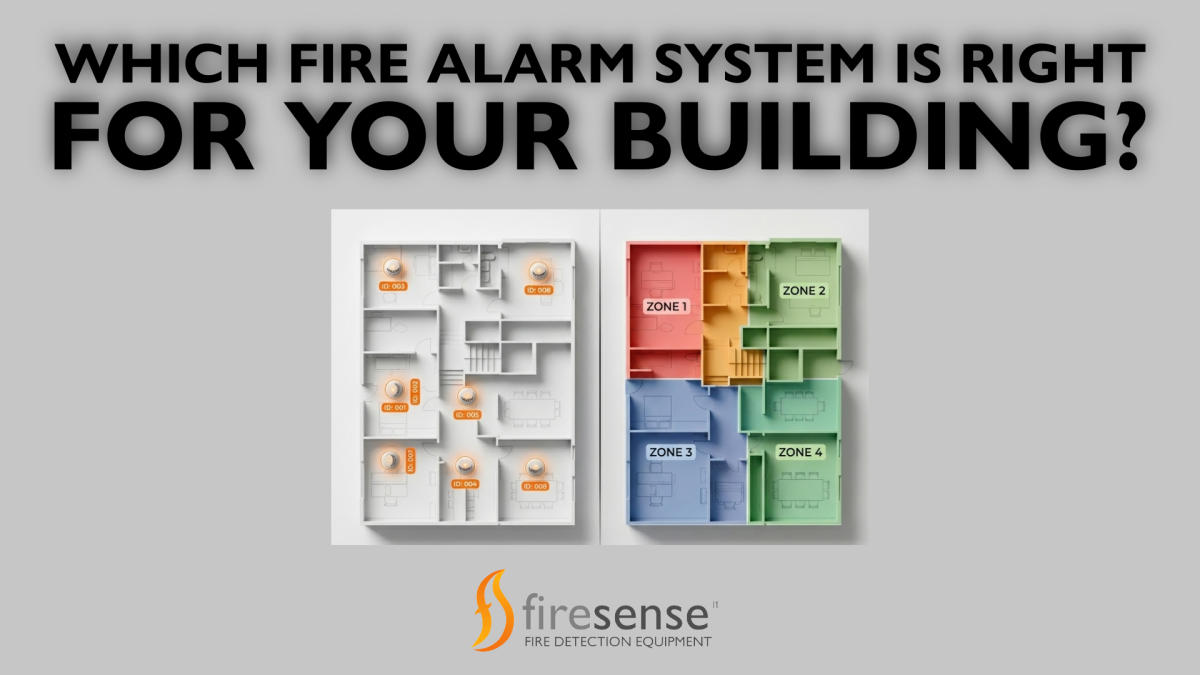
When choosing a fire alarm system, one of the most important decisions is whether to install an addressable or conventional system. Both are designed to provide that initial awareness level of protection of people and property, but they operate very differently and are suited to different building types, budgets, and operational requirements.
For facilities managers, contractors, business owners, and installers, understanding the differences between these two technologies is essential when planning a compliant and effective fire safety strategy.
At Firesense, we supply a wide range of both Addressable Fire Systems and Conventional Fire Systems to suit everything from small retail units to large commercial and industrial facilities, so we have all your needs covered.
What is a Conventional Fire Alarm System?
A conventional fire alarm system divides a building into zones. Each zone contains multiple devices, such as smoke detectors, heat detectors, and manual call points, wired back to the control panel on a dedicated circuit.
If an alarm activates, the panel identifies the affected zone rather than the exact device. For example, the system may indicate “Zone 2” requiring staff or emergency responders to investigate further to locate the source of the alarm.
Key Features of Conventional Systems
Key features of conventional systems include zone-based detection, a simpler wiring configuration, lower upfront installation costs, and straightforward operation and maintenance, all of which make them particularly well suited to smaller premises.
Conventional systems are commonly used in smaller settings such as offices, retail units, schools, restaurants, and residential buildings, where a simpler and more cost-effective fire alarm solution is often sufficient.
Because they are simpler in design, conventional systems are often the preferred choice where budgets are tighter or where the building layout is relatively uncomplicated. Get in touch with our specialists to find out more about these systems.
What is an Addressable Fire Alarm System?
An addressable fire alarm system is a more advanced solution where every connected device has its own unique digital address. This allows the control panel to identify the precise detector or call point that has been activated.
For example, instead of displaying a general zone alert, an addressable system can identify the exact source of the alarm, such as a smoke detector in Meeting Room 3 or a manual call point in the east stairwell.
This level of accuracy significantly improves emergency response times and simplifies ongoing maintenance.
Modern addressable systems also support intelligent monitoring, advanced programming, and integration with wider building management systems.
Key Features of Addressable Systems
Key features of addressable systems include device-level identification, advanced diagnostics and fault finding, flexible programming with cause-and-effect functionality, easier system expansion, integration with HVAC, access control, and emergency lighting systems, and improved maintenance efficiency.
Addressable systems are commonly installed in larger and more complex environments such as hospitals, hotels, warehouses, industrial facilities, large office buildings, and multi-site commercial premises, where precise alarm identification and advanced system control are especially valuable.
Addressable vs Conventional: The Main Differences
Conventional and addressable fire alarm systems differ mainly in how they identify alarms, how they are wired, and the level of control they offer. A conventional system indicates only the zone where an alarm has been triggered and uses separate circuits for each zone, making it simpler and less expensive to install but often requiring more manual investigation during maintenance. An addressable system, by contrast, pinpoints the exact device location and uses loop-based wiring, which supports faster fault identification, greater system intelligence, and much higher scalability. As a result, conventional systems are generally best suited to smaller buildings, while addressable systems are more appropriate for larger or more complex properties.
Which System is Easier to Maintain?
Addressable systems are generally easier and faster to maintain because the panel can pinpoint individual faults and device locations. If a detector develops a fault, the system identifies the exact component requiring attention.
In contrast, conventional systems may require engineers to manually inspect an entire zone to identify the issue. Discussions among fire alarm professionals frequently highlight how troubleshooting conventional systems can be more time-consuming, particularly when faults are intermittent.
For larger premises, this maintenance efficiency can significantly reduce downtime and servicing costs over the life of the system.
Which System is More Cost Effective?
Conventional systems usually have lower initial equipment and installation costs, making them attractive for smaller projects.
However, addressable systems can offer better long-term value in larger buildings because they reduce maintenance time, make future expansion easier, support faster fault diagnosis, and minimise disruption during servicing.
The overall cost-effectiveness depends heavily on the size and complexity of the building. Get in touch with our specialists to find out more about these systems and our pricing.
Are Addressable Systems Better for Large Buildings?
In most cases, yes.
Large or multi-storey buildings benefit from the precise location reporting and advanced control capabilities of addressable systems. These systems can also integrate with other safety infrastructure, including smoke ventilation, access control, emergency lighting, and fire door release systems, creating a more coordinated emergency response during an incident.
Addressable systems are also far more scalable, allowing additional devices and loops to be added as a building evolves.
When Should You Choose a Conventional System?
A conventional system may be the right choice where the building is relatively small, the layout is straightforward, budget is a key priority, advanced integration is unnecessary, and the number of detection zones is limited.
For many smaller businesses, conventional systems continue to provide reliable and compliant fire protection at a practical cost.
When Should You Choose an Addressable System?
An addressable system is often the better option where the building is large or complex, rapid alarm identification is important, advanced integration features are required, future expansion is likely, minimising maintenance time is a priority, and business continuity is critical.
Although the initial investment is typically higher, the additional functionality and long-term operational advantages often justify the cost.
Choosing the Right Fire Alarm System
There is no one-size-fits-all solution when it comes to fire safety. The best system depends on several factors, including building size, occupancy type, budget, regulatory requirements, future growth plans, and integration needs.
Working with experienced fire safety professionals ensures your system is properly specified for both compliance and performance.
At Firesense, we supply trusted fire detection solutions for a wide range of commercial and industrial applications, including both Addressable Fire Systems and Conventional Fire Systems.
Whether you need a simple zone-based setup or an intelligent addressable network, our team can help you find the right fire alarm solution for your project.
Still unsure? Get in touch today and a member of our fantastic (if we do say so ourselves) expert sales team will be more than happy to help. They're specialists for a reason.